The Importance of Authenticity in Art Deco Jewellery
Art Deco jewellery is the distinctive, geometric style that flourished between the 1910s and 1930s, reflecting a period of modernity, confidence, and artistic innovation. What makes original pieces especially desirable today is not just their striking appearance, but the fact that they were largely handcrafted by skilled artisans. This level of workmanship, combined with the historical importance of the era, makes authentic Art Deco jewellery a strong investment. While modern remakes can replicate the look, they cannot truly reproduce the time, skill, and individuality built into original pieces.
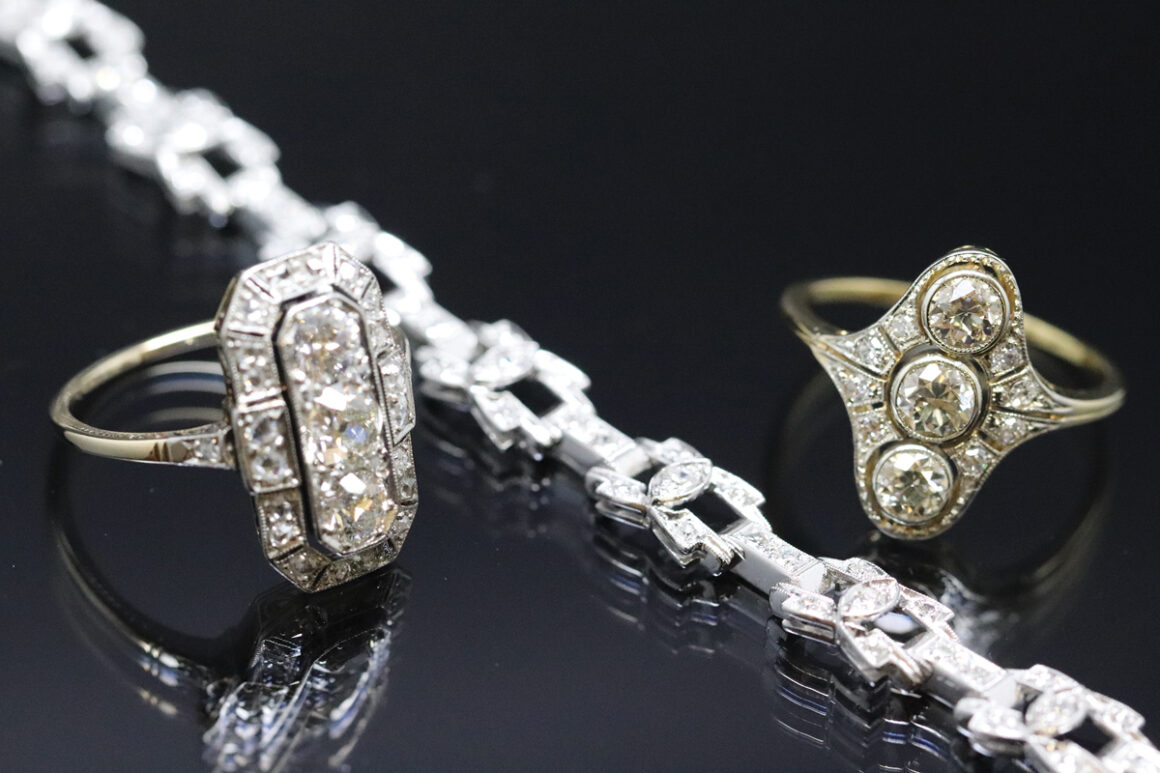
The materials used in genuine Art Deco jewellery already tell part of the story. Authentic pieces were often made in platinum, a metal that allowed jewellers to create delicate yet durable settings by hand. They typically feature older diamond cuts and carefully shaped gemstones such as onyx, jade, coral, and lapis lazuli, all precisely fitted into geometric designs. In comparison, remakes frequently use white gold and modern brilliant-cut stones, which can look brighter but lack the depth, character, and period authenticity of earlier materials.
The most important distinction, however, lies in craftsmanship. Original Art Deco jewellery was made at a bench, not on a production line. Jewellers shaped, set, and finished each element by hand, often incorporating fine milgrain edges, detailed engraving, and intricate openwork on the back of a piece. These subtle details create a sense of individuality and depth that is difficult to replicate. Remakes are typically cast and assembled using modern methods, resulting in a smoother, more uniform finish that can appear overly perfect and less personal when closely examined.
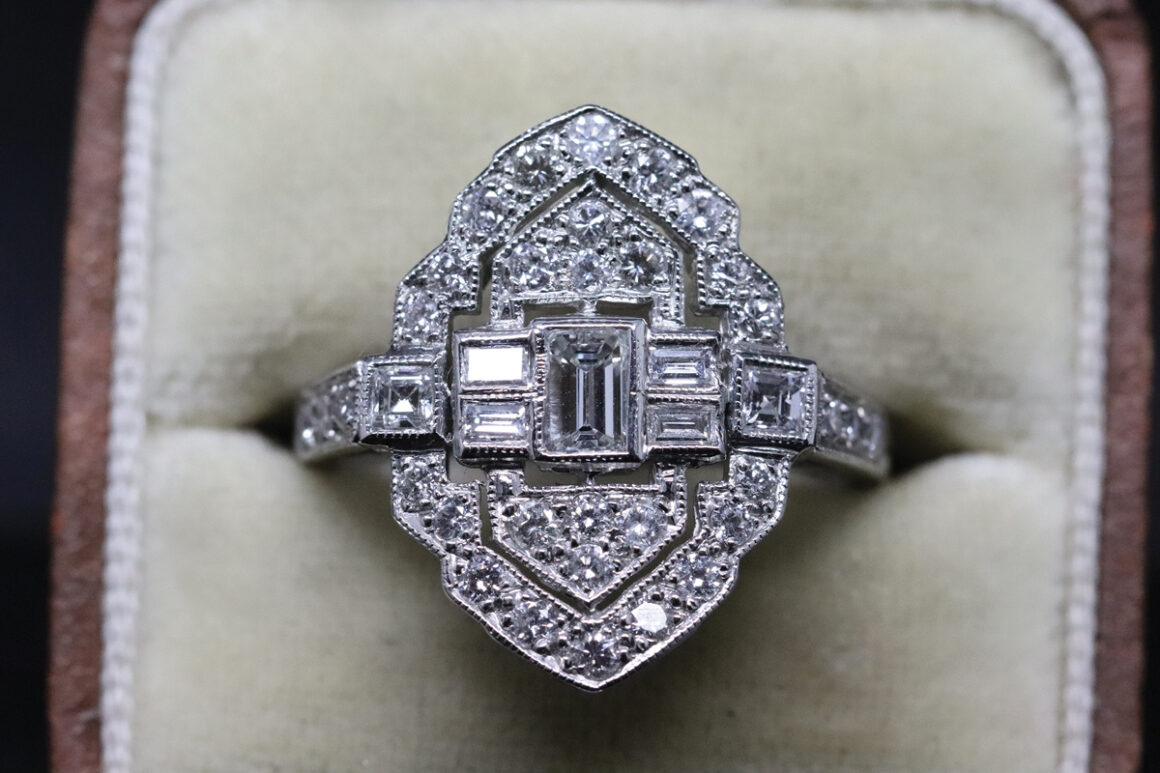
Design also highlights the difference between original and reproduction. True Art Deco pieces are carefully balanced and symmetrical, with strong geometric forms such as chevrons, stepped patterns, and bold contrasts between light and dark stones. Because they were handcrafted, these designs feel precise yet alive, with a level of artistry that reflects the maker’s hand. Remakes may follow the same visual themes but sometimes mix styles or lack the fine proportion and detail that comes from traditional craftsmanship.
Age and wear provide further clues. Authentic pieces often show gentle signs of time: softened edges, natural patina on the metal, and period-appropriate clasps or hinges. These features develop over decades and add to the character of the jewellery. Remakes may try to imitate age, but the wear can look surface-level or inconsistent, lacking the authenticity that comes from real history.
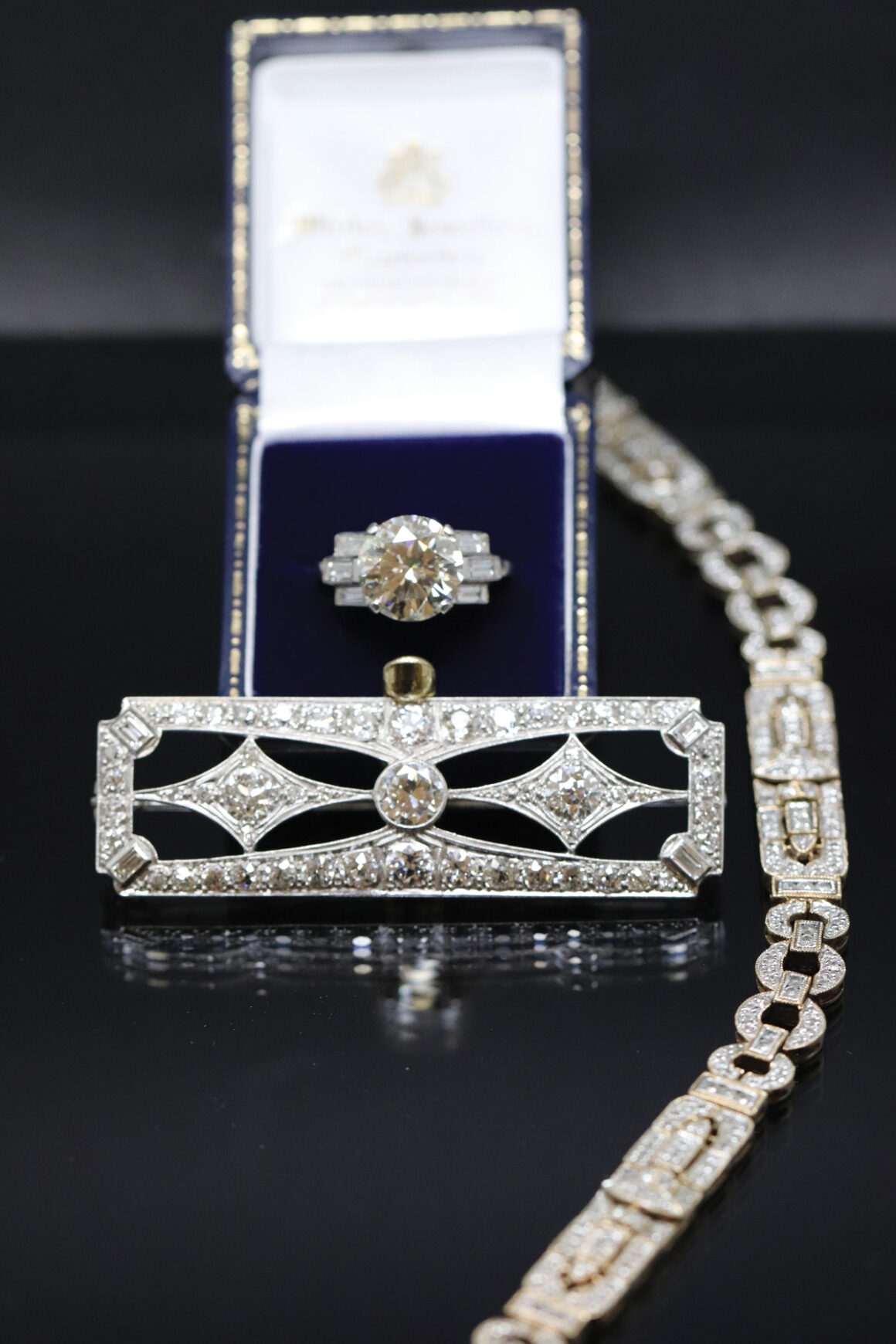
Some original pieces carry hallmarks from prestigious houses such as Cartier, Van Cleef & Arpels, or Tiffany & Co, though many were made by independent workshops and may have minimal markings. This is why expertise matters. A reputable jeweller who specialises in vintage pieces can recognise the signs of hand construction, period stone cuts, and authentic design in a way that is not always obvious to the untrained eye.
For anyone considering Art Deco jewellery as an investment, choosing where you buy is just as important as what you buy. A specialist vintage jeweller offers knowledge, provenance, and reassurance that a piece is genuinely from the era, not simply inspired by it. The handcrafted nature of authentic Art Deco jewellery gives each piece a unique story and lasting value, something remakes can imitate in appearance but rarely match in substance.
Frank Chapman of Whites Jewellers