Investing in the Past
Why fine antiques deserve a place in the conversation about alternative assets. By Alexander Pushkin, Founder of Pushkin’s

In periods of inflation and economic uncertainty, investors traditionally turn towards tangible assets. Gold, property and precious metals immediately come to mind, but there is another asset class that has been preserving wealth and giving its owners considerable pleasure for generations: fine antiques and collectables.
Unlike shares on a screen, an antique is something you can live with. A Georgian silver tea service can be used and admired, a fine gold box held in the hand, while an important piece of furniture can remain part of an interior for decades before passing to another generation. This combination of financial value, scarcity, craftsmanship and personal enjoyment makes antiques an unusual alternative asset.
Research from the Centre for Endowment Asset Management at Cambridge Judge Business School has examined collectables including art, furniture, jewellery, wine and classic cars over long periods. A 2026 study, covering up to 110 years of data across 13 categories, identified what researchers describe as an “emotional yield” the non-financial return owners receive simply from possessing and enjoying culturally significant or beautiful objects.
Of course, antiques should never be presented as guaranteed investments. Values fluctuate, tastes change, they can take time to sell and transaction costs may be considerable. The key is not simply to buy antiques, but to buy the right antiques at the right price and from the right source.
Scarcity plays an important part. There will never be another piece of Georgian silver made in 1775, nor will further original Fabergé objects emerge from the historic workshops of Imperial Russia. Yet age alone does not create quality. Rarity, condition, provenance, craftsmanship, historical relevance and the reputation of the maker can all influence desirability.
For anyone beginning a collection, one principle is particularly useful: buy fewer, better things. One exceptional object will generally make a stronger collection than ten ordinary examples. Study makers, periods, hallmarks and provenance, understand restoration and pay close attention to condition.
At Pushkin’s, we believe the best purchases are often objects you would still want to own even if investment considerations disappeared entirely. Periods of economic uncertainty can also bring interesting pieces back onto the market as estates sell, collectors rationalise collections and dealers release stock. For a knowledgeable and patient buyer, that can create opportunities.
Provenance has become increasingly important too. The internet has opened the antiques market to millions of buyers, but has also made incorrectly described, heavily restored or misrepresented pieces easier to encounter. For significant purchases, establish who stands behind the description, retain invoices and provenance, request condition reports and understand any restoration. Buying through established specialists and recognised professional trade associations can provide an important additional layer of confidence.
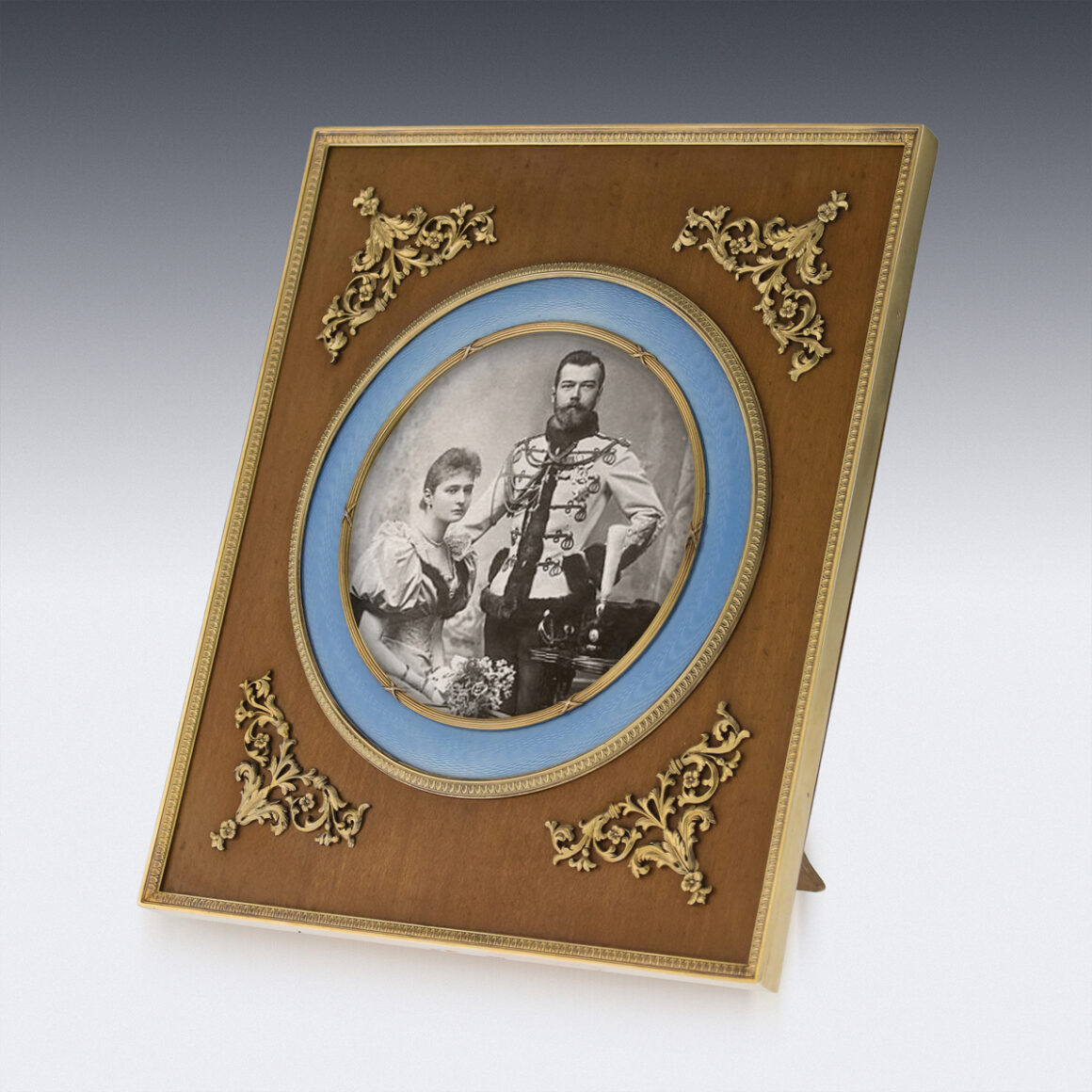
Antique 20thC Russian Silver-Gilt, Enamel & Wood Photo Frame, 3rd Artel, c.1910
20th Century Exceptional Russian silver gilt, guilloche enamel and wood photograph frame, rectangular shape, the bound reeded bezel border set within translucent light blue-coloured enamel over moiré engine-turning, wood surround, back and strut, sides mounted with a very fine acanthus leaf boarders and applied with scrolling floral plaques.
Hallmarked Russian silver 88 (915), St-Petersburg, Maker 3rd Artel — Active between 1908 and 1917 in St. Petersburg, it included almost thirty artisans and it produced artworks for Faberge and for the Imperial family.
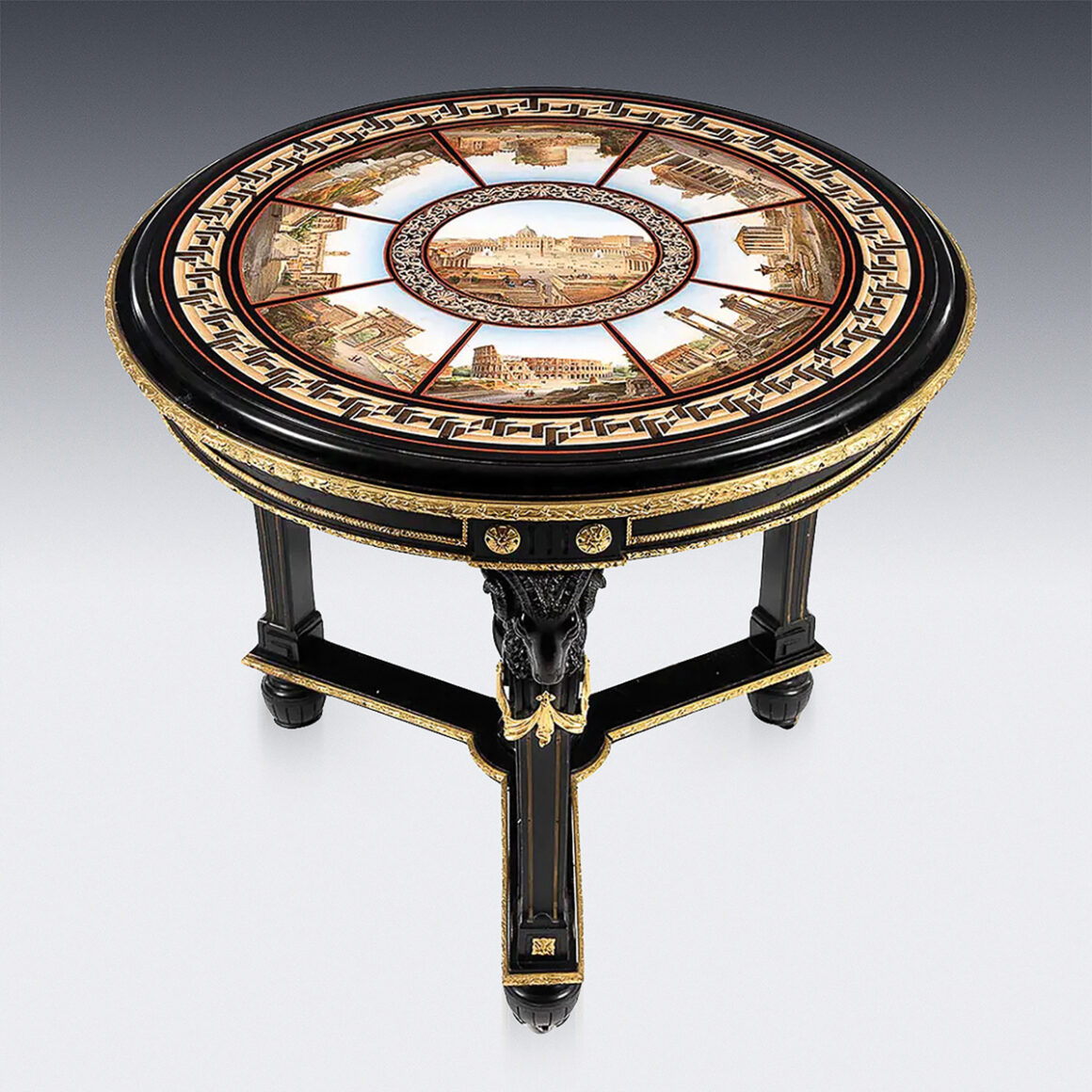
Antique 19thC Italian Grand Tour Micromosaic & Black Marble Table C.1870
19th Century Italian Grand Tour Micromosaic table top on an ebonised base, the central medallion with a view of St Peter’s Square, surrounded by reserves with views of the Pantheon, Tomb of Cecilia Metella, Temple of Vesta, Forum, Coliseum, Arch of Titus, Castel Sant’Angelo, and Capitoline Hill, with a large grey key frieze along the boarder.
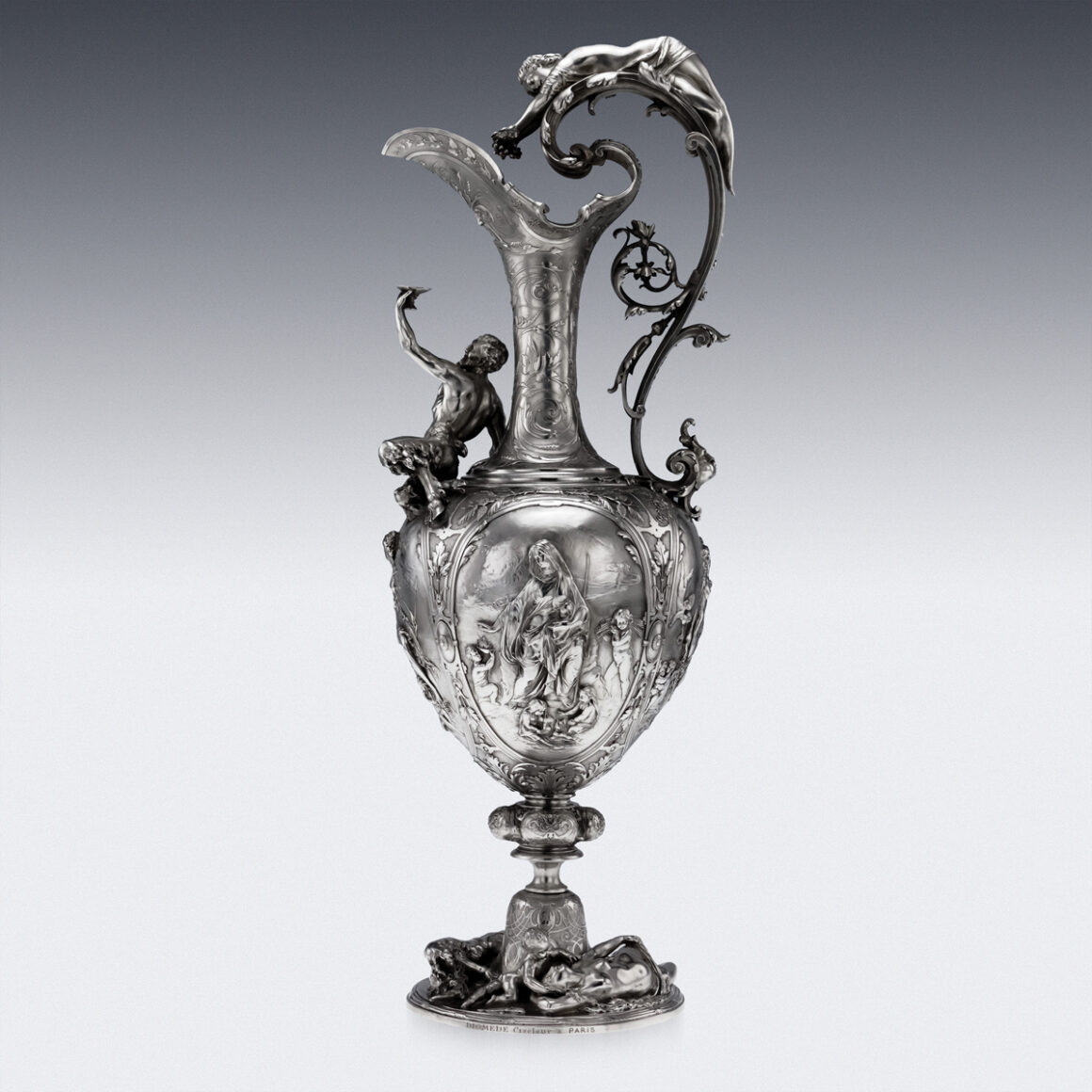
Antique 19thC Unique Odiot Solid Silver Exceptional Figural Ewer, Paris C.1875
19th Century French Solid Silver figural ewer, raised on a circular foot applied with cast Mythological figures, the tall baluster body is chased and applied with four allegories of the seasons surrounded by scrolling foliage decoration, the front is applied with a cast Satyr holding a cup, the large handle is applied with scrolling foliage and surmounted by a nude nymph squeezing grapes in the jug.
The base is Hallmarked French silver (Minerva’s head, 950), Paris, year 1870 – 80, Maker’s mark for Jean-Baptiste Gustave Odiot.
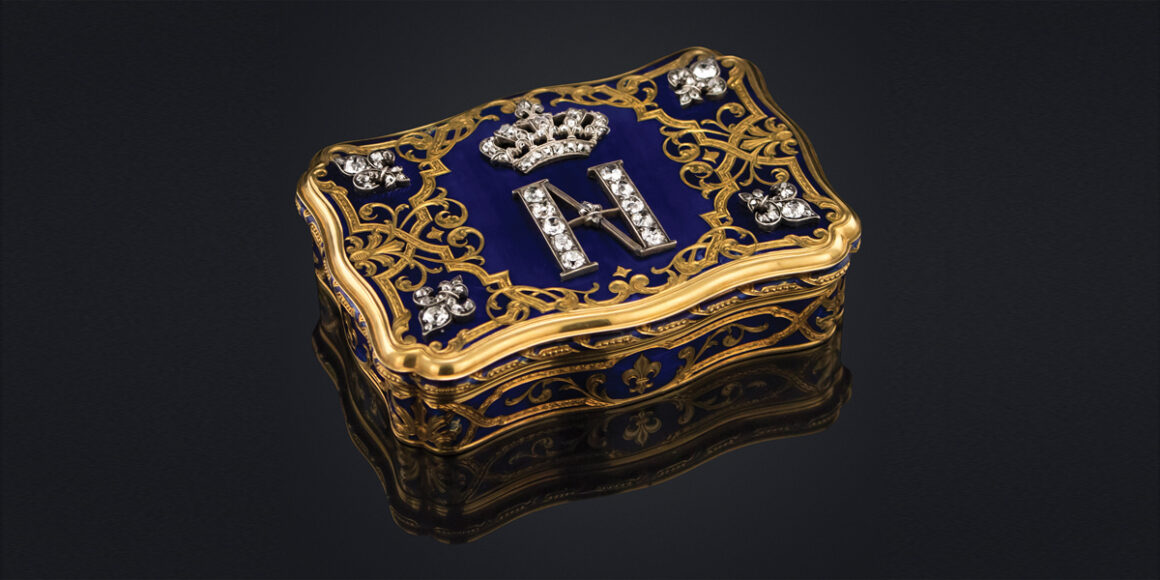
Antique 19thC French Gold & Enamel Bourbon Presentation Snuff Box C.1855
19th Century French jewelled gold and enamel snuff box, exceptionally fine and important, of shaped rectangular form, the lid applied with a royal crown above the cipher of Henry V de Bourbon, comte de Chambord (1820−1883), four fleur-de-lis, all set with rose-cut diamonds, blue enamel on a striped engine turned ground, the interior engraved: “Donné par Monsieur le / Comte de Chambord/ au Baron de Schwiter / 1855”. Hallmarked French gold, Paris, year about 1854 – 1855, Maker’s mark for Arthur Goossens.